
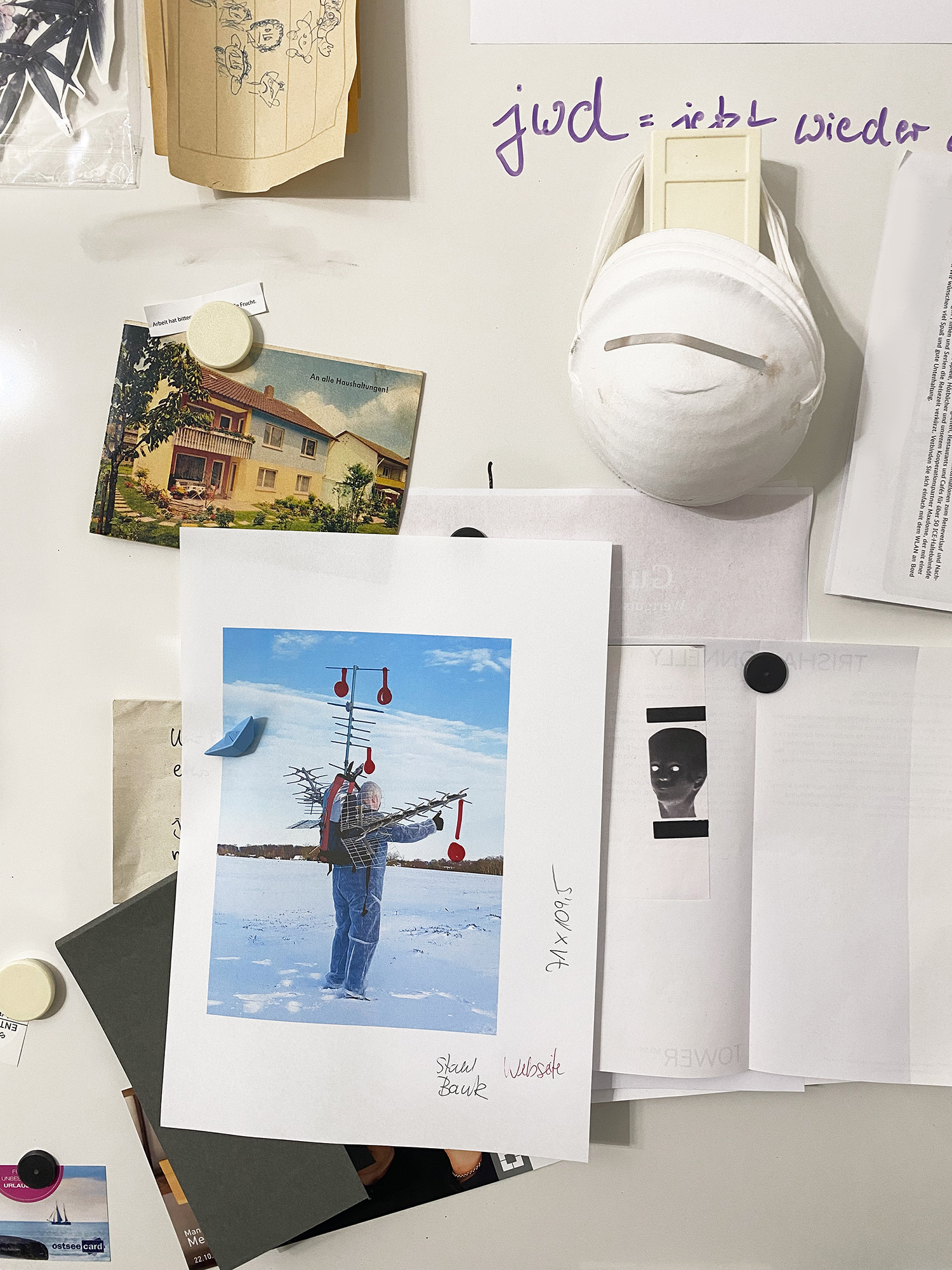
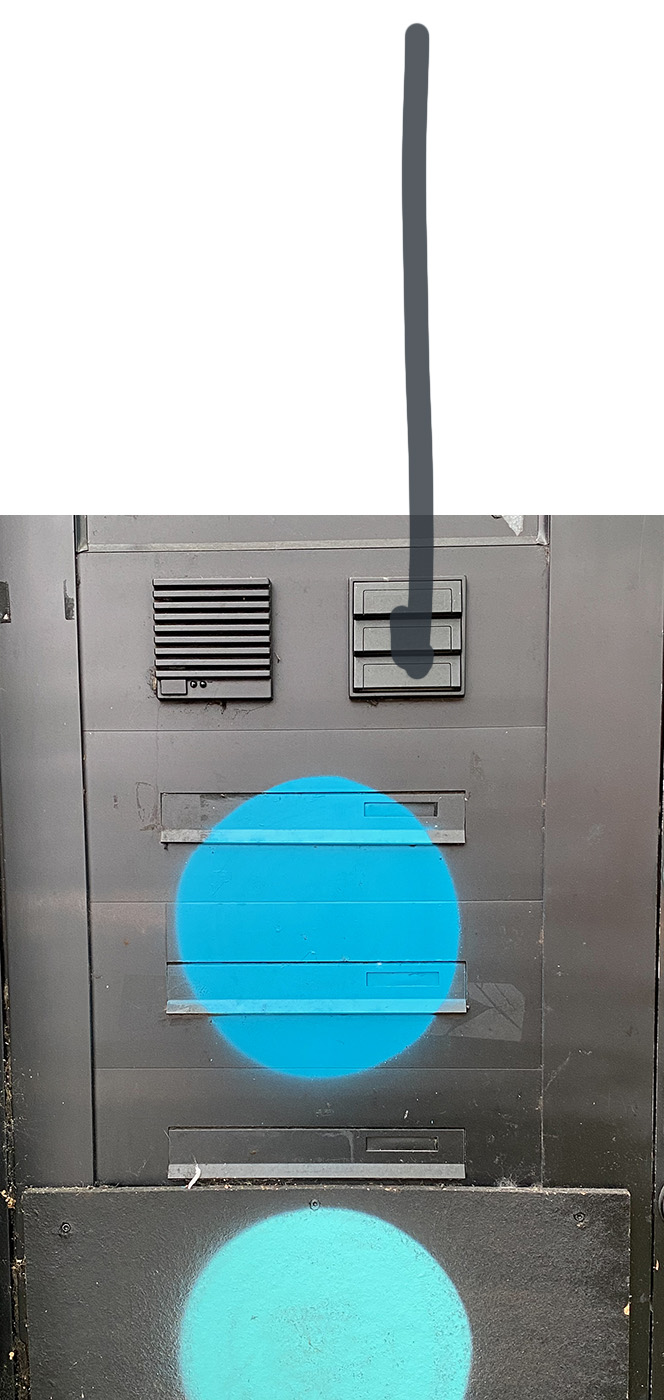
Abbildung 1 - E J Zabel
Let‘s start with the basics. How did you get into art?
I‘ve always had the urge to express myself artistically. I‘m not very good at communicating. It was the same at school. You could say I‘m just really shy. I didn‘t pick up anything from home. My parents and my friends and family had nothing to do with art. My father was a trained bricklayer, my mother a housewife. Nothing could have been further from art. As a child, I didn‘t go to museums and didn‘t have any real art lessons; it was more about creating things with colors and materials.
Interesting. So you seem to be more of an autodidact. Are you an outsider?
Me? Yes, of course. If there were more outsiders in the world, it would be a better place. But I‘m not an autodidact. I only was during my childhood and youth. After that, I studied art in Braunschweig with Armleder, Monkiewitsch and Thadeusz.
Where do you get your ideas for motifs?
From my surroundings, from experiences, from visual stimuli. You could also say from my head. I love ideas and I love developing them. I‘m full of ideas, and they all have to come out into the world, they just have to be done. Actually, I would need dozens of assistants so that everything that lies dormant within me could be realized in my lifetime.
That sounds like tremendous creative energy. Why did you become artists and not designers, for example?
Hmmm. There are many designers who are successful as artists. And honestly... there isn‘t really much difference between these job titles anymore. Most artists are reproducers of their own works. Often unhappy, because they simply have to satisfy the market or their gallery owners in order to make a living from their art. Of course, it‘s great when you can make a living from your art, but this only applies to a fraction of artists. But that‘s just an aside; that would be a separate topic. As an artist, you should be free and able to try new things again and again. Otherwise, nothing new can be created. Perhaps that is the problem of our time. It is only partially true that everything has already been done by someone else at some point. Most artists simply lack ideas, or they are trapped, or they are just trying to secure their livelihood.
Do you think it‘s still possible today to develop a truly unique artistic voice and stand out from the crowd?
Absolutely. I just don‘t believe in the concept of artistic genius. For me, that‘s a myth that doesn‘t exist. An artist is someone who does what they can and what they want to do. All this talk of artistic genius comes from outside. People are hyped up so that museums can adorn themselves with them and speculators can make a fortune. But ultimately, that‘s also a phenomenon of our time. People want “stars” – even among artists. Take a look at Instagram, for example, and see how many artists are active there, chasing trends and likes. Someone gets a lot of likes and suddenly there are epigones jumping on the bandwagon, using the same techniques and motifs. And I‘m not talking about the hobbyists who hang out there, but about artists. All individuality and ideas are lost. Whether someone makes it into the Hall of Fame or not is always a matter of chance and depends on many factors, not least of which are relationships, family background, gender, place of residence, age, and even appearance. No joke! This plays a role for both genders.
Do men have it easier than their female colleagues?
Perhaps. As a male artist, you feel like you have more opportunities. With many female artists, I get the impression that they want to be taken seriously at all costs and don‘t dare to do anything provocative, to simply be courageous and put themselves “in danger.” And for fear of not being taken seriously, they create works that always have to have a lot of background or that allow a deep look into the soul, but in any case always want to appear serious. That‘s a shame. Of course, there are reasons for this, not least because men have always been favored. But there are also some female artists that I really like.
Let‘s move on to your work. It‘s very difficult to categorize, as you work with painting, installations, ceramics... to name just a few things. Why do you use such a variety of media?
I choose the medium that is most suitable for realizing my ideas. I don‘t see why I should limit myself. Of course, I could do everything in painting and stick to that technique. But honestly, I think the mix is good and right and refreshing for me and also for the viewer. For my work, I choose the technique that best conveys the message and that I consider appropriate. Sometimes I come across something that simply interests me as a form or object. So much so that I want to work with it. My environment, my world, is not just 2-D. I don‘t see why I should translate everything around me into flat paintings.
What are your fears and hopes for the future? Personally and socially?
We live in a time of fearmongering and polarization. All over the world, I see despots and villains, starting with the US. And many others follow the motto “if they have villains, we need even worse villains.” It‘s crazy. Just look at how stupid humanity has become. And the stupidest people are the ones who voice their opinions loudest on the internet. The internet is destroying our world. Maybe we should just shut it down.
Yes, perhaps that would be reasonable.
Sanity is the key word! We need more sanity! And we must learn not to take ourselves so seriously and see ourselves as the center of the universe; we must learn to forgive. And we need more discipline in following rules. Rules in general. They are extremely important. People who demand more freedom have not understood humanity. We have more freedom than ever before in human history, and the world is burning more and more. I say give people rules and make sure they follow them. The Bible has already taught us that. I‘m not religious, but even our ancestors knew that crowds of people need to be controlled, need support, need rules! And that should start in childhood. We need more discipline in schools, a ban on cell phones, respect for teaching staff. Ideally, we should have all-day schools, or rather... we should introduce boarding schools and only let the children go home every other weekend. Believe me, it would make everything better.
That sounds very political. Are you a political person? Is your art political?
Everything I do is political, everything you do is political. People are always political, because politics influences all areas of life and everyone lives in a political system that shapes their lives. Even those who consciously describe themselves as apolitical are affected by this, because political decisions affect everyday things such as their own housing, education, or social security systems. But I don‘t belong to any party, if you want to know. I vote, and I know who not to vote for. That‘s something, at least. (laughs) While we‘re on the subject of parties... I‘m really annoyed by all the mudslinging between the parties at the moment. For me, parties should be an offer to the citizens. They present their party program, everything they stand for and what they want to achieve or change, and the citizens should have a choice. Just as I have a choice between car brands, food, etc. It‘s also simply a matter of honesty and decency. Imagine, for example, if car manufacturers badmouthed each other instead of promoting their brand. So every company, every brand, every business would not highlight its own advantages, but would try to destroy others by spreading lies and badmouthing them. Apply that to society. Where would that lead us? But that is currently the situation with the political parties.
That all sounds very negative; you seem to be annoyed by a lot of things.
Yes, I just noticed that too. Maybe that‘s the case. Maybe that‘s also the reason why I make art. I escape into a feeling of well-being. Someone clever once said that a good revolution is one that helps you feel good. I feel good with my art. So I‘m a revolutionary! It‘s about time more people recognized that and followed me. [laughs loudly]
Excerpt from an interview between Manuela Fersen and Erdmann Julius Zabel